
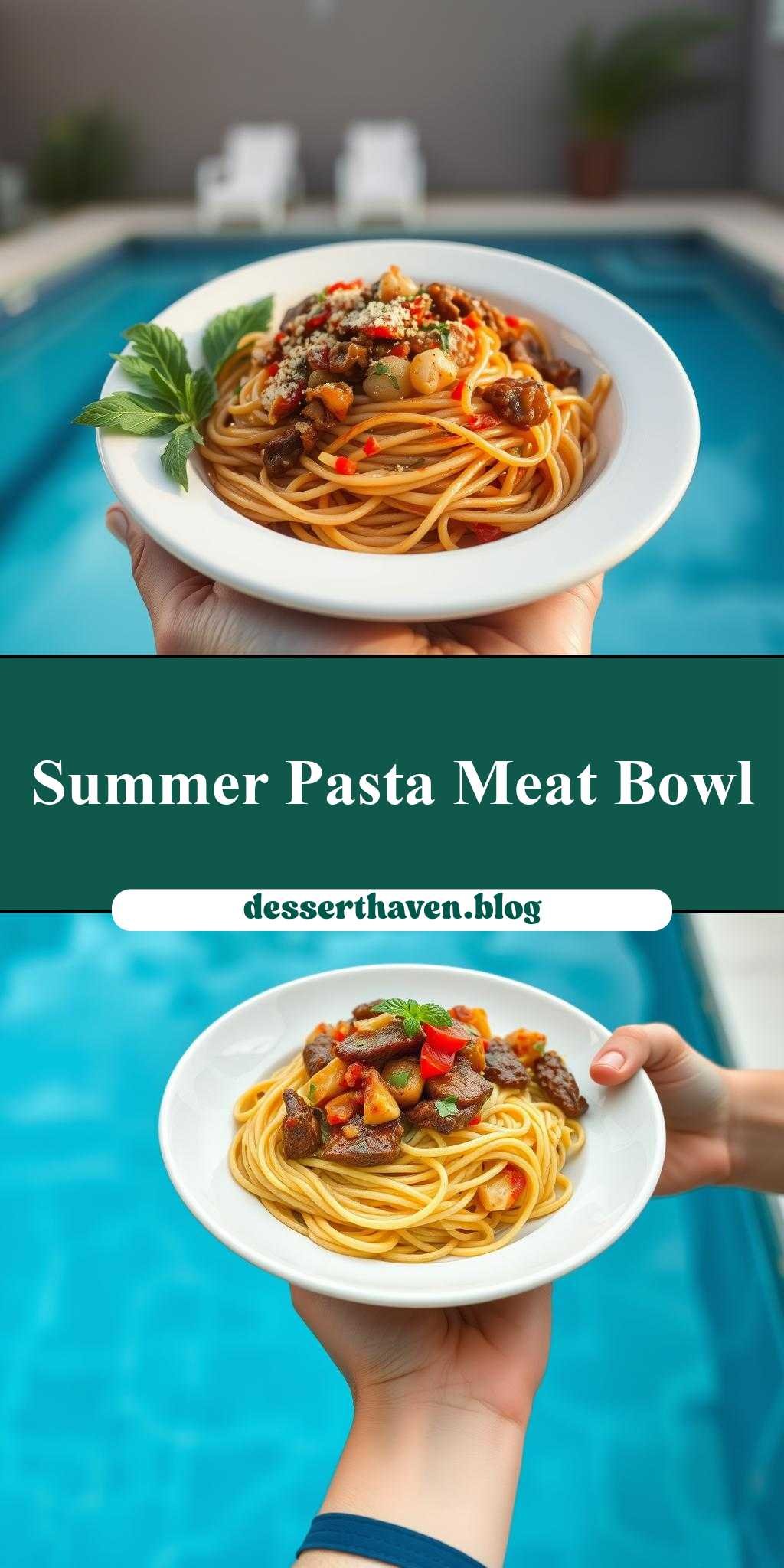
What’s the perfect poolside meal? A hearty bowl of homemade spaghetti with tender meat and sautéed vegetables, made easy with quick cooking methods, is a great weeknight dinner option, save this idea for a family favorite
a person holding a bowl of spaghetti with meat and vegetables on top, in front of a swimming pool
Introduction
Imagine a warm summer day, lounging by the pool, and indulging in a delicious, satisfying bowl of spaghetti loaded with savory meat and an assortment of colorful vegetables. This dish embodies the essence of a perfect summer meal: it’s easy to make, packed with flavor, and can be customized with your favorite ingredients. The best part? It’s incredibly simple to prepare, making it an ideal choice for a quick lunch or a leisurely dinner by the pool. In this recipe, we’ll guide you through the process of creating this mouthwatering spaghetti dish that combines the richness of meat, the freshness of vegetables, and the comfort of a well-cooked pasta, all set against the serene backdrop of a swimming pool.
Why This Works
- Flavor balance and ingredient accessibility: This recipe strikes a perfect balance between the savory taste of meat, the natural sweetness of vegetables, and the earthy flavor of tomatoes. Moreover, the ingredients are easily accessible in most supermarkets, making it a convenient choice for anyone.
- Ease of preparation: The dish is remarkably easy to prepare. It involves straightforward steps like cooking the spaghetti, preparing the meat and vegetable sauce, and then combining everything together. This simplicity makes it a great option for both beginners and experienced cooks.
- Impressive results with minimal effort: Despite its simplicity, the dish presents impressively. The combination of colors from the vegetables, the meat, and the pasta creates a visually appealing meal that’s sure to impress family and friends, whether you’re dining by the pool or in the comfort of your home.
Key Ingredients
The main ingredients for this recipe include spaghetti, ground beef or alternative meat of your choice, onions, bell peppers, tomatoes (fresh or canned), garlic, olive oil, salt, pepper, and any other desired vegetables or seasonings. For practical substitutions, you can use different types of meat like ground turkey, chicken, or vegetarian options such as mushrooms or tofu for a meat-free version. Additionally, you can customize the vegetables based on your preferences and what’s available in your pantry or local market.
Instructions
- Step 1: Begin by preparing your ingredients. Chop the onions, bell peppers, and any other vegetables you’re using. Mince the garlic to release its flavor. Measure out your spaghetti and have your canned tomatoes ready if using.
- Step 2: Cook your spaghetti in boiling, salted water until it’s al dente. Reserve a cup of pasta water before draining the spaghetti. This water can be used later to adjust the sauce’s consistency.
- Step 3: In a large pan, heat some olive oil over medium heat. Add the chopped onions and sauté until they’re translucent. Then, add the minced garlic and cook for another minute, ensuring it doesn’t burn. Add your ground meat, breaking it up with a spoon as it cooks, until it’s fully browned. Follow this by adding your chopped bell peppers and any other vegetables, cooking until they’re tender. Finally, add your tomatoes (canned or fresh), salt, pepper, and any other desired seasonings. Let the sauce simmer, allowing the flavors to meld together.
- Step 4: To finalize your dish, add the cooked spaghetti to the meat and vegetable sauce. Toss everything together, adding some of the reserved pasta water if the sauce seems too thick. Serve hot, garnished with parsley or parmesan cheese for added flavor and presentation.
Handy Tips
- Always use high-quality ingredients when possible, as they can significantly impact the flavor of your dish. For the meat, choose lean options to avoid excessive grease in your sauce. When it comes to vegetables, fresher is better, but frozen or canned alternatives can be just as nutritious and flavorful.
- Don’t overcook your spaghetti. Al dente texture provides the best eating experience. Similarly, be gentle when cooking your vegetables to preserve their crunch and color.
- Consider adding a splash of red wine to your sauce for added depth of flavor. Consider using herbs like basil or oregano to give your sauce a more authentic Italian taste.
Heat Control
Heat control is crucial in this recipe, especially when cooking the meat and simmering the sauce. Start with medium heat to prevent burning the garlic or onions. When adding the ground meat, you may need to adjust the heat to prevent it from cooking too quickly on the outside before it’s fully browned on the inside. For simmering the sauce, low to medium heat is ideal. This allows the flavors to combine slowly and reduces the risk of the sauce becoming too thick or even burning.
Crunch Factor
Achieving the right crunch factor in this dish is about balancing the textures. The spaghetti should be al dente, providing a firm bite. The vegetables, especially if you’re using bell peppers or carrots, should retain some of their crunch to contrast with the softness of the pasta and the richness of the meat sauce. To achieve this, cook your vegetables until they’re just tender, still crisp but not raw. This balance of textures adds depth and enjoyment to the meal.
Pro Kitchen Tricks
- One of the best tricks for enhancing the flavor of your sauce is to let it simmer for a longer period. This allows all the ingredients to meld together, creating a rich and satisfying taste. If you’re short on time, even 10-15 minutes of simmering can make a significant difference.
- Use a mixture of ground meats for a more complex flavor profile. For example, combining beef with pork or veal can add depth to your sauce.
- For easier cleanup, prepare all your ingredients before starting to cook. This not only makes the cooking process smoother but also helps in keeping your kitchen tidy as you go along.
Storage Tips
- Leftovers can be stored in the refrigerator for up to 3 days. When reheating, add a bit of water or tomato sauce to revive the moisture and flavor of the dish.
- For longer storage, consider freezing the cooked spaghetti and sauce separately. Frozen spaghetti can become mushy when thawed, so it’s best to cook it fresh when possible. However, the meat and vegetable sauce freezes well and can be reheated and combined with freshly cooked spaghetti.
- Use airtight containers to store your leftovers. Not only does this keep your food fresh, but it also prevents other flavors in the fridge from affecting your dish.
Gift Packaging Ideas
If you’re considering gifting this dish, perhaps for a potluck or as a care package, there are several creative ways to package it. For a more rustic appeal, use mason jars and fill them with the sauce and some grated parmesan cheese. The recipient can then cook their spaghetti and combine everything together. Alternatively, you can package the cooked spaghetti and sauce in microwave-safe containers, making it easy for the recipient to reheat and enjoy. Don’t forget to include some garlic bread or a green salad recipe to complement the meal.
Flavor Variations
- Different spices: Experiment with various spices to give your dish a unique twist. For example, adding some cumin and chili powder can give it a Mexican flair, while basil and oregano can enhance the Italian flavors.
- Creative toppings: Consider adding some creative toppings to your spaghetti, such as roasted vegetables, grilled chicken, or even some fried eggs for a breakfast twist.
- Ingredient swaps: Don’t be afraid to swap out ingredients based on your dietary preferences or what’s available. For a vegan version, you could use tofu or tempeh instead of meat, and vegan cheese instead of parmesan.
Troubleshooting
- Texture problems: If your spaghetti becomes too mushy, it’s likely overcooked. For future reference, aim for the al dente texture. If your sauce is too thick, you can thin it out with some of the reserved pasta water or a bit of broth.
- Ingredient replacements: If you’re missing an ingredient, don’t hesitate to substitute it with something similar. For example, if you don’t have bell peppers, zucchini or mushrooms could work as alternatives.
- Over/undercooking signs: Keep an eye on your meat and vegetables while they’re cooking. Undercooked meat can be harmful, while overcooked vegetables lose their flavor and texture. Adjust your cooking time based on the specific ingredients you’re using and their quantities.
FAQs
- Can I freeze it? Yes, you can freeze the sauce and cook the spaghetti fresh when you’re ready to eat. This helps maintain the texture of the pasta.
- Is it gluten-free? Traditional spaghetti contains gluten, but there are gluten-free alternatives made from rice, quinoa, or corn flour that you can use as a substitute.
- Can I double the recipe? Absolutely, this recipe can be easily doubled or tripled to feed a larger crowd. Just ensure you have enough pots and pans to accommodate the increased quantity of ingredients.
Conclusion
Creating a delicious spaghetti dish with meat and vegetables by the pool, or in the comfort of your own home, is a straightforward and rewarding process. With a few simple ingredients and some basic cooking techniques, you can produce a meal that’s not only tasty but also visually appealing. Don’t be afraid to experiment with different ingredients and seasonings to make the dish your own, and enjoy the process of sharing your creations with family and friends. Whether you’re a seasoned cook or just starting out, this recipe is a great way to explore the world of Italian cuisine and the joy of cooking.