
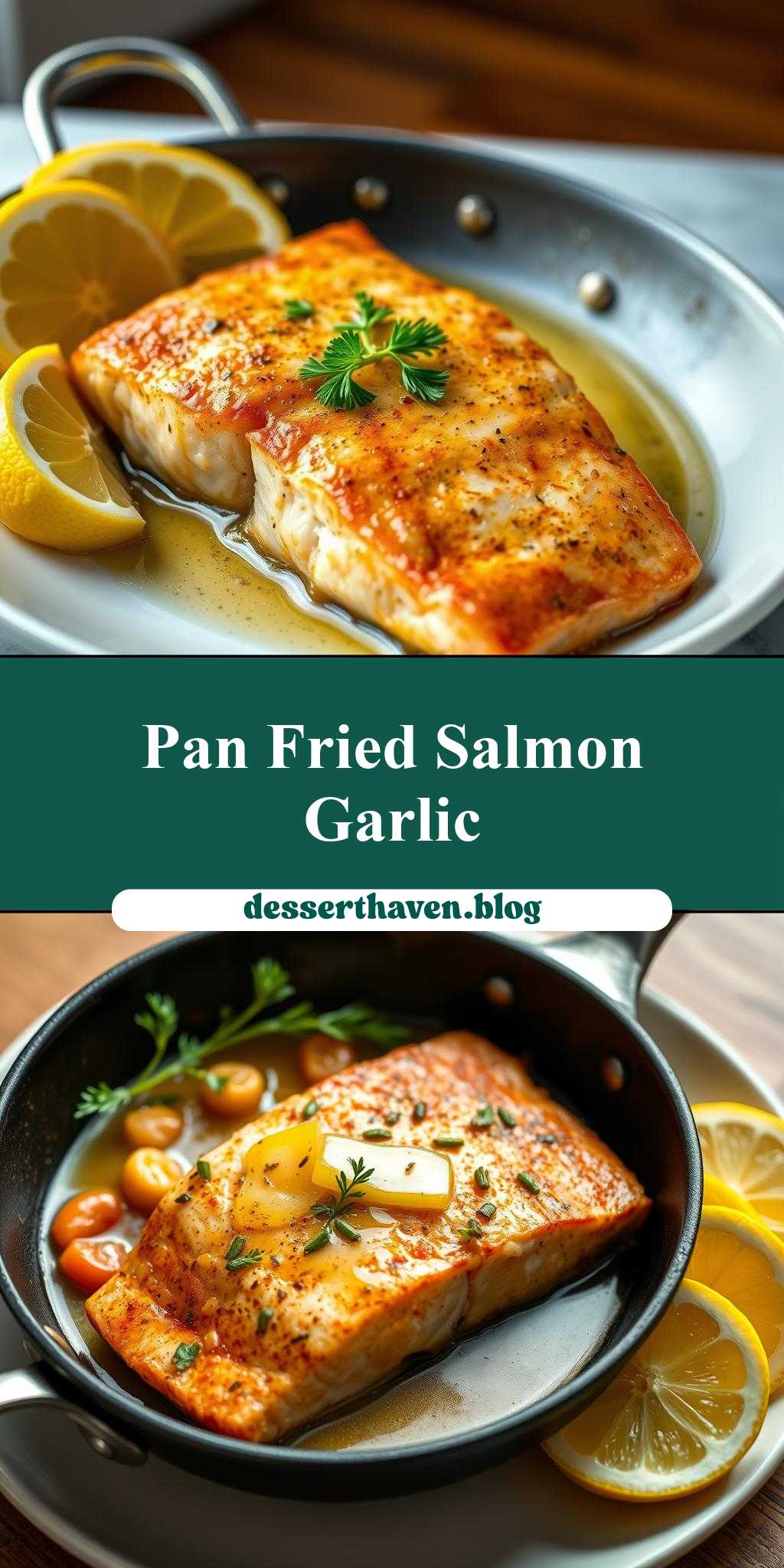
What makes pan seared salmon truly unforgettable? A rich garlic butter sauce, of course, made quick and easy in a skillet with a squeeze of fresh lemon. Perfect for a homemade weeknight dinner, try pairing it with your favorite sides for a family favorite meal. Save this idea for a deliciously easy dinner solution.
pan fried salmon with garlic butter sauce recipe in a skillet and lemon wedges on the side
Introduction
Imagine a dish that combines the flakiness of salmon, the richness of garlic butter, and the brightness of lemon, all coming together in a skillet that’s as easy to prepare as it is impressive to serve. This pan-fried salmon with garlic butter sauce recipe is a masterclass in balance and flavor, using everyday ingredients to create a culinary experience that’s both comforting and sophisticated. Whether you’re a seasoned chef or a beginner in the kitchen, this recipe is designed to make you shine with minimal effort, leveraging the simplicity of pan-frying to bring out the best in your ingredients.
Why This Works
- Flavor balance and ingredient accessibility: The combination of salmon, garlic, butter, and lemon provides a harmonious balance of flavors that are both accessible and easy to find in most grocery stores.
- Ease of preparation: The steps involved in preparing this dish are straightforward and quick, making it perfect for a weeknight dinner or a special occasion.
- Impressive results with minimal effort: Despite its simplicity, the presentation and taste of this dish are sure to impress, with the garlic butter sauce adding a luxurious touch to the pan-fried salmon.
Key Ingredients
The main ingredients for this recipe include fresh salmon fillets, garlic, butter, lemons, salt, and pepper. For the garlic butter sauce, you’ll also need some parsley and dill for added freshness. When it comes to substitutions, you can use other types of fish if salmon isn’t available, though the cooking time may vary. For a vegan version, you could experiment with tofu or tempeh, adjusting the seasoning accordingly. The beauty of this recipe lies in its flexibility and the ability to adapt it to your dietary preferences and ingredient availability.
Instructions
- Step 1: Begin by preparing your ingredients. Chop the garlic finely and mix it with softened butter, salt, and pepper in a bowl until you get a smooth, aromatic paste. Cut the lemons into wedges and set them aside for serving.
- Step 2: Season the salmon fillets with salt and pepper. Heat a skillet over medium heat and add a small amount of oil. Once the oil is hot, place the salmon fillets in the skillet, skin side up if they have skin. Cook for about 3-4 minutes on the first side, or until the skin is crispy and golden, then flip them over and cook for another 3-4 minutes, or until they’re cooked through.
- Step 3: While the salmon is cooking, melt the garlic butter in a small saucepan over low heat. Once melted, add some chopped parsley and dill for extra flavor and freshness. Stir gently and let it simmer for a minute or two until the sauce is fragrant and slightly thickened.
- Step 4: To serve, place the cooked salmon fillets on a plate, spoon the garlic butter sauce over them, and serve with lemon wedges on the side. This allows each person to squeeze as much lemon juice as they like over their salmon, adding a burst of citrus flavor to the dish.
Handy Tips
- Make sure your salmon fillets are at room temperature before cooking to ensure even cooking. Also, don’t overcrowd the skillet; cook the salmon in batches if necessary, to prevent them from sticking together.
- For an extra crispy skin, pat the salmon dry with a paper towel before seasoning and cooking. This step helps remove excess moisture, leading to a crisper finish.
- Don’t overcook the garlic butter sauce; it should be lightly simmered to preserve the freshness of the herbs and the flavor of the garlic. Overheating can make the butter separate and the sauce lose its appeal.
Heat Control
Heat control is crucial in this recipe, especially when cooking the salmon. The ideal temperature for cooking salmon is medium heat, which allows for a gentle cooking process that retains the moisture and flavor of the fish. For the garlic butter sauce, low heat is recommended to prevent the butter from burning or separating. Timing is also key; cook the salmon for about 3-4 minutes per side, or until it reaches an internal temperature of 145°F (63°C), indicating it’s cooked through.
Crunch Factor
The crunch factor in this dish comes from the crispy skin of the salmon, if it has skin, and the slight crunch of the garlic in the butter sauce. To achieve a crispy skin, make sure the skin is dry before cooking, and don’t move the salmon too much in the skillet during the first few minutes of cooking. This initial undisturbed cooking time allows the skin to develop a nice crust. For the garlic, finely chopping it and cooking it briefly in the butter helps retain some of its texture, adding a pleasant crunch to the sauce.
Pro Kitchen Tricks
- Use high-quality ingredients: The freshness and quality of your salmon, garlic, and herbs will significantly impact the flavor of your dish. Choose the best you can find for the best results.
- Don’t overcomplicate the dish: The beauty of this recipe lies in its simplicity. Avoid adding too many ingredients or complicated steps, as this can detract from the natural flavors of the salmon and the garlic butter sauce.
- Presentation matters: Garnish with fresh herbs and serve with lemon wedges to add a pop of color and freshness to the plate. This not only makes the dish more appealing but also enhances the dining experience.
Storage Tips
- Leftover salmon can be stored in the refrigerator for up to 2 days. It’s best to store it in an airtight container to keep it fresh. Reheat it gently in the oven or microwave until warmed through.
- The garlic butter sauce can be made ahead and stored in the fridge for up to a week. Simply melt it when you’re ready to use it. You can also freeze it for up to 3 months and thaw it when needed.
- For shelf life, it’s best to consume the salmon within a day of cooking for optimal flavor and texture. If you’re planning to store it, make sure it’s cooled completely before refrigerating or freezing to prevent bacterial growth.
Gift Packaging Ideas
If you’re considering gifting this dish, perhaps for a dinner party or as part of a meal train, consider packaging the salmon and garlic butter sauce separately. The sauce can be jarred and garnished with fresh herbs, while the salmon can be wrapped in foil or placed in a microwave-safe container for easy reheating. Add a bag of lemon wedges and a side of your choice, like roasted vegetables or a salad, for a complete and thoughtful gift.
Flavor Variations
- Different spices: Experiment with various spices like paprika, cumin, or coriander to add a unique twist to your salmon and garlic butter sauce.
- Creative toppings: Consider adding some capers, chopped onions, or grated cheese to the garlic butter sauce for added flavor and texture.
- Ingredient swaps: For a lighter version, you could use less butter or substitute it with olive oil. You could also use different types of fish or add some shrimp for a seafood mix.
Troubleshooting
- Texture problems: If your salmon turns out too dry, it might be overcooked. Try cooking it for less time or checking its internal temperature more frequently. For the garlic butter sauce, if it separates, simply whisk it vigorously or heat it gently until it comes back together.
- Ingredient replacements: If you’re out of an ingredient, don’t be afraid to substitute. Just remember, the flavor and texture might be slightly different. For example, you could use lime instead of lemon for a different citrus flavor.
- Over/undercooking signs: For salmon, look for flakes that easily separate with a fork, indicating it’s cooked through. If it’s still firm and doesn’t flake easily, it might need more cooking time. The garlic butter sauce should be lightly simmered and not boiled, as this can cause it to burn or separate.
FAQs
- Can I freeze it? Yes, you can freeze both the cooked salmon and the garlic butter sauce. For the salmon, it’s best to freeze it as soon as possible after cooking, and for the sauce, you can freeze it in an airtight container or ice cube tray for up to 3 months.
- Is it gluten-free? Yes, this recipe is naturally gluten-free, making it a great option for those with gluten intolerance or preference.
- Can I double the recipe? Absolutely, you can double or even triple this recipe if you’re serving a larger crowd. Just remember to adjust the cooking time slightly if you’re cooking more salmon fillets at once.
Conclusion
This pan-fried salmon with garlic butter sauce recipe is a versatile and delicious addition to any meal. With its simple yet elegant preparation, it’s perfect for both everyday dining and special occasions. Feel free to experiment with different flavors and ingredients to make it your own, and don’t hesitate to reach out if you have any questions or need further substitutions or variations. Happy cooking, and enjoy the delightful combination of salmon, garlic, and lemon in every bite!