
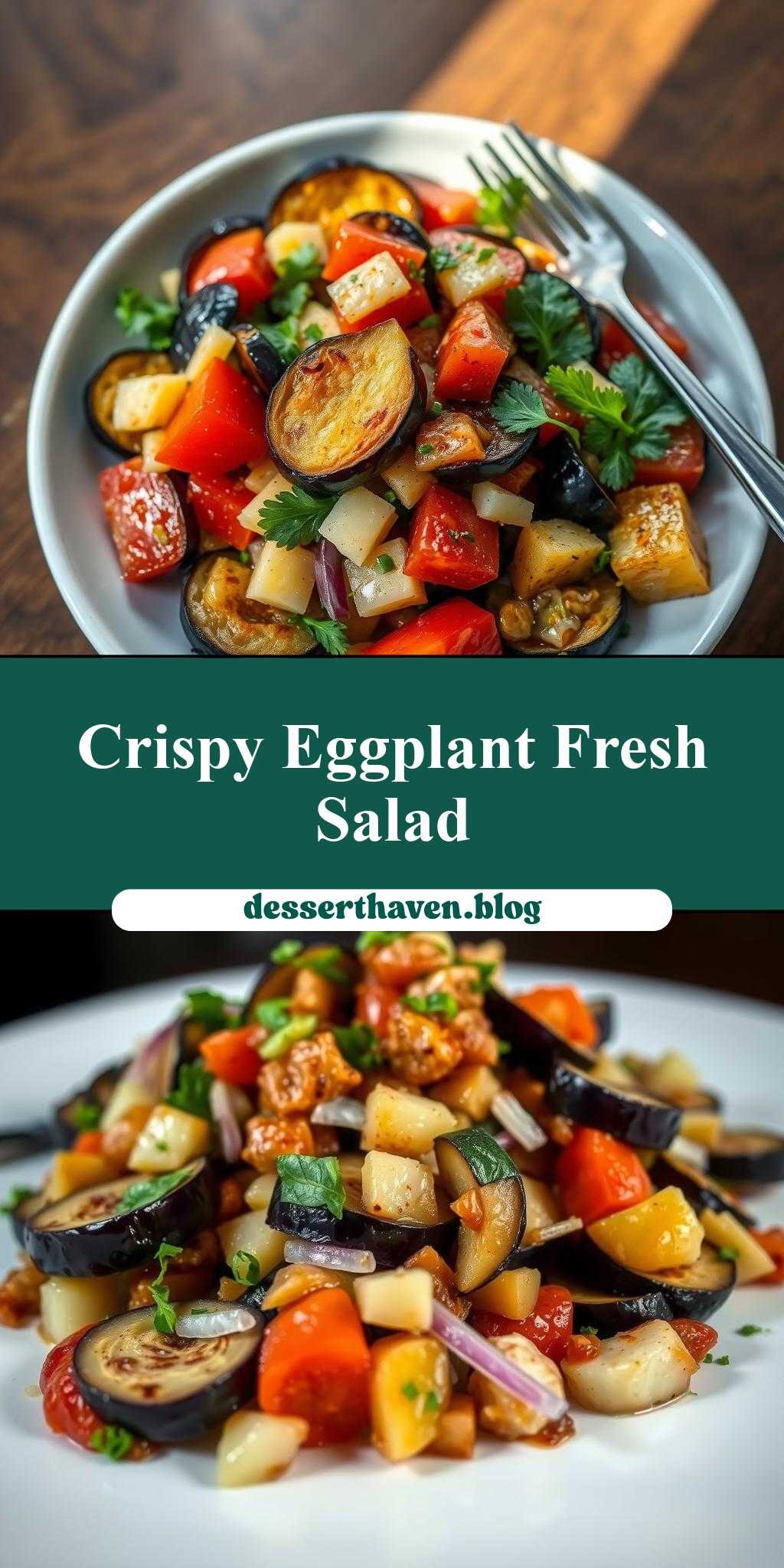
What makes a perfect summer side dish? A fresh eggplant salad with roasted vegetables and homemade vinaigrette is my go-to quick and easy solution for a weeknight dinner. Grilled eggplant adds a nice smoky flavor to this family favorite. Save this idea for a delicious and healthy meal anytime.
Eggplant Salad
Introduction
The Eggplant Salad is a vibrant and delectable dish that embodies the essence of summer with its refreshing flavors and the ease of preparation, making it perfect for both novice cooks and seasoned chefs alike. This salad is a masterclass in balance and creativity, utilizing everyday ingredients to create a truly impressive culinary experience. At its core, the Eggplant Salad is about simplicity, allowing the natural flavors of its components to shine, while also providing a canvas for personal touches and creativity. Whether you’re looking for a light lunch, a side dish for a barbecue, or a healthy snack, this salad is sure to delight with its combination of tender eggplant, crunchy textures, and a burst of fresh herbs.
Why This Works
- Flavor balance and ingredient accessibility: The beauty of the Eggplant Salad lies in its ability to balance a variety of flavors, from the earthy sweetness of eggplant to the tanginess of dressing, all while using ingredients that are readily available in most supermarkets.
- Ease of preparation: One of the most appealing aspects of this salad is how straightforward it is to prepare. With a few simple steps, you can transform basic ingredients into a dish that’s both healthy and appetizing.
- Impressive results with minimal effort: Despite its simplicity, the Eggplant Salad presents beautifully, making it an excellent choice for entertaining guests or special occasions without requiring hours of preparation.
Key Ingredients
The Eggplant Salad centers around a few key ingredients, each playing a crucial role in the overall flavor and texture of the dish. These include eggplants, which provide the base of the salad; fresh herbs like parsley and dill, which add a bright, fresh flavor; a zesty dressing, typically made with olive oil, lemon juice, and garlic, which ties all the flavors together; and sometimes, additional ingredients like onions, bell peppers, or feta cheese, which can add depth and variety to the salad. For those looking for substitutions, zucchini or portobello mushrooms can make interesting alternatives to eggplant, offering different textures and flavors to experiment with.
Instructions
- Step 1: Begin by preparing your eggplants. This usually involves slicing them into your desired thickness, whether that’s thin rounds or cubed pieces, and then salting them to draw out excess moisture. Let them sit for about 30 minutes to allow the salting process to take effect, then rinse and pat them dry.
- Step 2: Cook the eggplant slices or cubes. This can be done by grilling them for a smoky flavor, baking them in the oven for a softer texture, or simply sautéing them in a pan with some olive oil until they’re tender and lightly browned. The method you choose will depend on the texture and flavor you’re aiming for in your salad.
- Step 3: While the eggplant is cooking, prepare your dressing and any additional ingredients. Chop your fresh herbs, dice any onions or bell peppers you’re using, and crumble feta cheese if that’s part of your recipe. Then, mix your dressing ingredients together, tasting as you go to ensure the balance of flavors is to your liking.
- Step 4: Finally, assemble your salad. In a large bowl, combine your cooled eggplant, chopped herbs, and any other ingredients you’re using. Drizzle your dressing over the top and toss gently to ensure everything is well coated. Serve immediately, or let it sit in the refrigerator for a few hours to allow the flavors to meld together.
Handy Tips
- One of the most helpful tips for making an Eggplant Salad is to not overwork the eggplant. Whether you’re grilling, baking, or sautéing, it’s easy to end up with mushy, unappetizing pieces if you cook them for too long. Aim for a tender but still firm texture to keep your salad fresh and appealing.
Heat Control
If you’re cooking your eggplant, whether by grilling, baking, or sautéing, the key is to control the heat to achieve the perfect doneness. For grilling, medium heat usually works best, allowing for a nice char on the outside while keeping the inside tender. For baking, a moderate oven temperature (around 400°F) is ideal, and for sautéing, keep your stove on medium to medium-low heat to prevent burning. The goal is to cook the eggplant until it’s soft and lightly browned, indicating it’s ready to be incorporated into your salad.
Crunch Factor
The crunch factor in an Eggplant Salad can come from a variety of sources, including fresh herbs, crunchy vegetables like bell peppers or onions, and even toppings like toasted pine nuts or pistachios. To achieve the right balance of textures, consider what elements you want to highlight in your salad. For example, if you’re using softer herbs like parsley, you might want to add some crispy fried capers for contrast. The key is to balance soft and hard textures to keep each bite interesting.
Pro Kitchen Tricks
- One expert tip for enhancing the flavor of your Eggplant Salad is to let it sit for a while after assembly. Allowing the flavors to meld together can make a significant difference in the depth and richness of your salad. Even 30 minutes in the refrigerator can be beneficial, but if you have the time, letting it sit for a couple of hours or even overnight can be even better.
Storage Tips
- For storing leftovers of your Eggplant Salad, it’s best to keep it in an airtight container in the refrigerator. This will help preserve the freshness of the ingredients and prevent the salad from becoming soggy. If you’ve used ingredients like feta cheese or nuts, you might want to consider storing them separately and adding them just before serving to maintain their texture.
- In terms of shelf life, the salad is typically best consumed within a day or two of making it. However, if you’ve not added any dairy or highly perishable ingredients, it might last a bit longer. Always check the salad for any signs of spoilage before consuming it.
Gift Packaging Ideas
If you’re considering gifting your Eggplant Salad, perhaps for a potluck or as a healthy option for a friend, there are several creative ways to package it. Mason jars are a popular choice, as they’re airtight, easy to carry, and can be dressed up with a ribbon or label. You could also use reusable containers or even wrap the salad in a decorative paper cone for a more rustic, picnic-inspired look. Whatever method you choose, make sure it’s secure, easy to transport, and visually appealing to make your gift a hit.
Flavor Variations
- Different spices: Consider adding a pinch of cumin for a Middle Eastern flair, some smoked paprika for a smoky depth, or a bit of chili flakes for a spicy kick.
- Creative toppings: In addition to the standard onions and bell peppers, think about adding some chopped olives, artichoke hearts, or even some grilled chicken or tofu for added protein.
- Ingredient swaps: If you want to change up the base of your salad, zucchini, portobello mushrooms, or even roasted sweet potatoes could offer interesting alternatives to eggplant, each bringing their own unique flavor and texture to the dish.
Troubleshooting
- Texture problems: If your eggplant ends up too mushy, it might be because it was overcooked. Try adjusting your cooking time or method for better results. Conversely, if it’s too hard, it might not have cooked long enough.
- Ingredient replacements: If you find yourself without a key ingredient, don’t be afraid to substitute. For example, if you don’t have lemon juice, vinegar could work in a pinch, or if you’re out of parsley, dill or basil could add a similar fresh flavor.
- Over/undercooking signs: Keep an eye on your eggplant as it cooks. If it starts to brown too quickly, it might be getting too much heat. Conversely, if it remains hard after cooking, it might need a bit more time.
FAQs
- Can I freeze it? While you can freeze cooked eggplant, the texture might change slightly, becoming softer. It’s best to freeze the eggplant before assembling the salad, then thaw and mix with fresh ingredients when you’re ready to serve.
- Is it gluten-free? Yes, the Eggplant Salad is naturally gluten-free, making it a great option for those with gluten intolerance or sensitivity, provided that the dressing and any additional ingredients used are also gluten-free.
- Can I double the recipe? Absolutely, the Eggplant Salad scales well. Simply double all the ingredients and adjust the cooking time slightly if you’re dealing with a larger quantity of eggplant.
Conclusion
In conclusion, the Eggplant Salad is a versatile, delicious, and healthy dish that can be adapted to suit a wide range of tastes and dietary needs. With its simple preparation, impressive presentation, and the opportunity to add your own creative twists, it’s a recipe that’s sure to become a staple in your kitchen. Whether you’re a fan of eggplant or just looking for a new salad idea, this dish is certainly worth trying. So, don’t be afraid to experiment, share your creations with friends and family, and enjoy the process of making something truly special with everyday ingredients.