
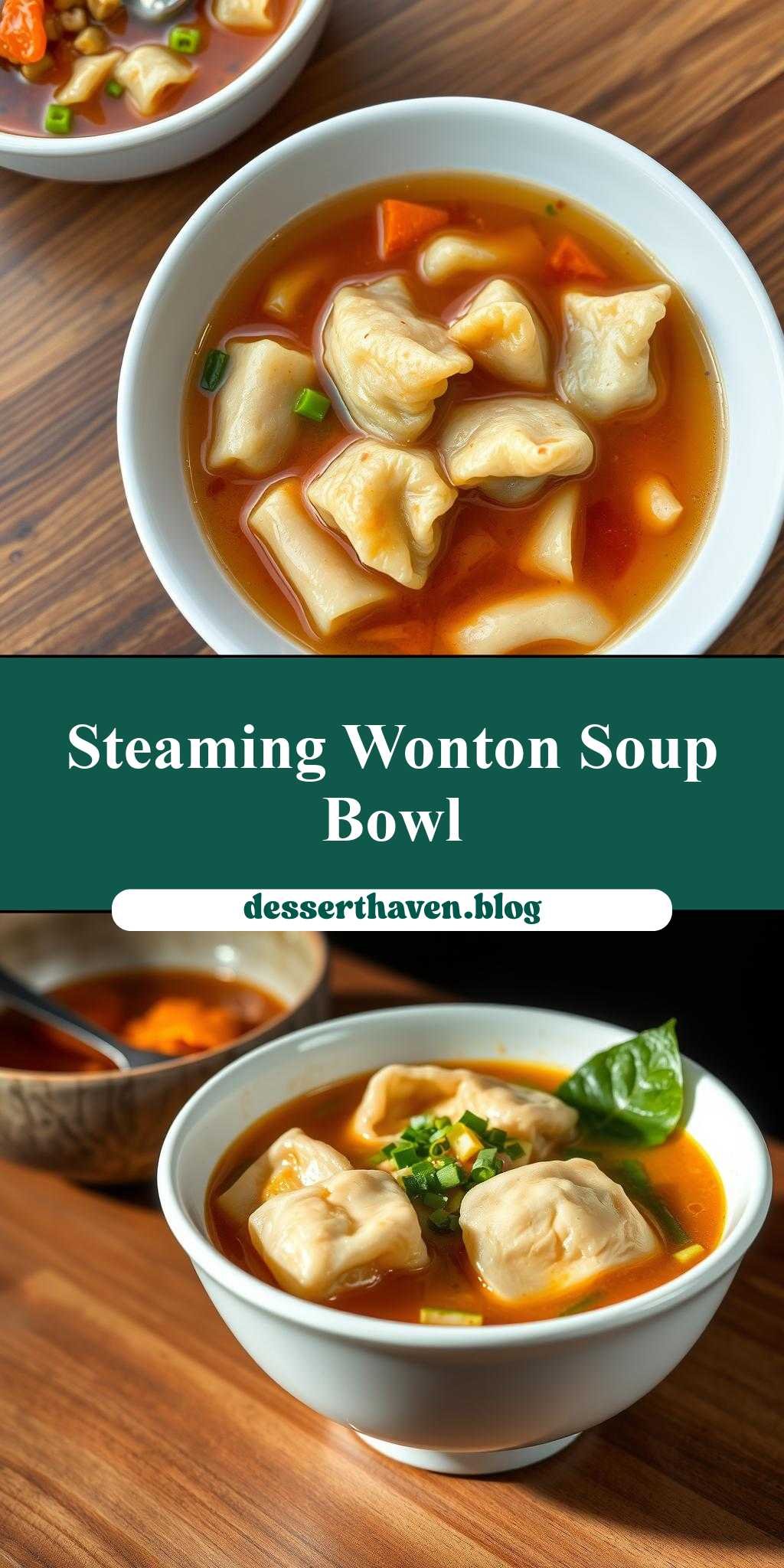
What makes a perfect weeknight dinner? A steaming bowl of homemade wonton soup, filled with tender pork and delicate wrappers, served with a side of soothing broth. This easy recipe is a family favorite, made quick with store-bought wontons and a light simmer. Save this idea for a cozy night in.
a white bowl filled with wonton soup on top of a wooden table next to another bowl
Introduction
Imagine a warm, inviting meal that embodies the perfect balance of simplicity and flavor, all nestled in a delicate white bowl. Wonton soup is one of those dishes that never fails to impress, not just with its taste but also with its ease of preparation and the creativity it allows in using everyday ingredients. This traditional Chinese soup is a masterclass in comfort food, featuring tender wontons filled with your choice of savory delights, all swimming in a light, nourishing broth. Whether you’re a seasoned chef or a beginner in the kitchen, wonton soup is a dish that will quickly become a favorite, offering a versatile canvas for your culinary creativity.
Why This Works
- Flavor balance and ingredient accessibility: The beauty of wonton soup lies in its ability to balance delicate flavors with robust ones, all while using ingredients that are easily accessible in most supermarkets.
- Ease of preparation: Despite its impressive presentation and complex flavors, wonton soup is surprisingly easy to make. The process of preparing the wontons and the broth can be straightforward and enjoyable, making it a perfect dish for a weeknight dinner or a special occasion.
- Impressive results with minimal effort: One of the most appealing aspects of wonton soup is the contrast between the simplicity of its preparation and the sophistication of its presentation. With minimal effort, you can create a dish that looks and tastes like it was prepared in a high-end restaurant.
Key Ingredients
The main ingredients for wonton soup include wonton wrappers, which are usually found in the frozen food section or the international aisle of most supermarkets. For the filling, you can choose between pork, shrimp, or a combination of the two, mixed with finely chopped vegetables like cabbage and green onions, and seasoned with soy sauce, sesame oil, and ginger. The broth is typically made with a chicken or pork stock, to which you can add aromatics like ginger, garlic, and star anise for depth of flavor. Practical substitutions can be made for the filling ingredients based on personal preference or dietary restrictions, making wonton soup a versatile dish for various tastes and needs.
Instructions
- Step 1: Begin by preparing the filling. In a large mixing bowl, combine your chosen protein (pork, shrimp, or a combination of both) with finely chopped cabbage, green onions, soy sauce, sesame oil, and ginger. Mix everything well until just combined, being careful not to overmix.
- Step 2: Lay a wonton wrapper on a flat surface. Place a small spoonful of the filling in the center of the wrapper. Dip your finger in a small amount of water and run it along the edges of the wrapper. Fold the wrapper into a triangle by bringing the two opposite corners together to form a point. Press the edges together to seal the wonton. Repeat with the remaining wrappers and filling.
- Step 3: To make the broth, combine chicken or pork stock with sliced ginger, garlic, and star anise in a large pot. Bring the mixture to a boil, then reduce the heat and let simmer for at least 20 minutes to allow the flavors to meld together. Season the broth with soy sauce and sesame oil to taste.
- Step 4: To cook the wontons, bring the broth to a gentle simmer. Carefully add the wontons to the pot, making sure not to overcrowd it. Cook the wontons for about 5 minutes, or until they float to the surface. Serve the wontons in bowls with the hot broth ladled over them. Garnish with green onions and your choice of toppings, such as sliced ginger or chili oil.
Handy Tips
- When wrapping the wontons, make sure to seal them tightly to prevent the filling from escaping during cooking. Also, don’t overfill the wontons, as this can cause them to burst open in the broth.
- For a clearer broth, skim off any impurities that rise to the surface after bringing the stock to a boil. You can also use a cheesecloth or a fine-mesh sieve to strain the broth before serving.
- Experiment with different fillings and seasonings to make the dish your own. For example, you can add diced mushrooms or carrots to the filling for extra flavor and texture.
Heat Control
Heat control is crucial when making wonton soup, especially when cooking the wontons. The ideal temperature for cooking wontons is a gentle simmer. If the water is boiling too vigorously, the wontons may cook unevenly or even break apart. As for the broth, it’s essential to simmer it long enough to extract all the flavors from the aromatics, but not so long that it becomes too salty or concentrated. The doneness of the wontons can be determined by the time they float to the surface, which usually takes about 5 minutes. It’s also a good idea to cut into one of the wontons to ensure the filling is cooked through.
Crunch Factor
The texture of wonton soup is a delicate balance between the tender wontons and the crisp garnishes. To achieve the perfect crunch, garnish the soup with thinly sliced green onions and, if desired, crispy fried shallots or garlic. The wontons themselves should be cooked until they are just tender, still retaining a bit of firmness to the bite. Overcooking the wontons can make them mushy and unappetizing, so it’s crucial to monitor their cooking time closely.
Pro Kitchen Tricks
- Use high-quality wonton wrappers that are fresh and have good elasticity. This will make wrapping the wontons easier and help them hold their shape better during cooking.
- Don’t overcrowd the pot when cooking the wontons. Cook them in batches if necessary, to ensure they have enough room to cook evenly.
- For an extra rich and flavorful broth, use a combination of chicken and pork stock, and add some dried mushrooms or scallops for added depth.
Storage Tips
- Wontons can be made ahead of time and stored in the refrigerator for up to a day or frozen for up to a month. When storing, make sure to layer the wontons with parchment paper to prevent them from sticking together.
- The broth can also be made ahead and stored in the refrigerator for up to 3 days or frozen for up to 2 months. Reheat the broth gently before serving, and adjust the seasoning as needed.
- For leftovers, store the cooked wontons and broth separately in airtight containers in the refrigerator. Reheat the broth and then add the wontons to cook for an additional minute or until heated through.
Gift Packaging Ideas
While wonton soup is typically served fresh, the components of the dish can be packaged as a gift for a unique and thoughtful present. Consider packaging the broth and wontons separately, along with some garnishes like green onions and chili oil, and including a recipe card with instructions on how to assemble and serve the soup. This can be especially lovely for someone who loves cooking or is looking for a comforting meal. Use decorative jars for the broth and airtight containers for the wontons, and don’t forget to include a personalized note or a sprinkle of garnishes on top for a touch of elegance.
Flavor Variations
- Different spices: Experiment with various spices and seasonings in the filling and the broth. For example, a pinch of cumin or coriander can add a warm, earthy flavor, while a sprinkle of red pepper flakes can introduce a spicy kick.
- Creative toppings: In addition to traditional garnishes like green onions and ginger, consider adding other toppings to enhance the flavor and texture of the soup. This could include sliced mushrooms, diced bell peppers, pickled ginger, or even a dollop of sour cream or yogurt.
- Ingredient swaps: Feel free to swap out ingredients based on your dietary preferences or what’s available in your pantry. For instance, you could use tofu or tempeh instead of pork or shrimp, or substitute the chicken stock with a vegetable broth for a vegetarian version.
Troubleshooting
- Texture problems: If your wontons are too dense or heavy, it might be because the filling was overmixed. Try to mix the ingredients just until they come together, and avoid overworking the mixture. If the wontons are too fragile and break apart during cooking, it could be due to the quality of the wrappers or insufficient sealing.
- Ingredient replacements: If you can’t find certain ingredients, don’t be afraid to substitute them with similar alternatives. For example, if you can’t find wonton wrappers, you could use egg roll wrappers or even make your own dough from scratch.
- Over/undercooking signs: Keep an eye on your wontons while they’re cooking, and remove them from the broth as soon as they float to the surface. If you prefer your wontons more well-done, you can cook them for an additional minute or two, but be careful not to overcook them, as they can become tough and chewy.
FAQs
- Can I freeze it? Yes, you can freeze both the uncooked wontons and the broth. For the wontons, place them on a baking sheet lined with parchment paper, making sure they don’t touch each other, and then transfer them to a freezer-safe bag or container. The broth can be frozen in airtight containers or ice cube trays for later use.
- Is it gluten-free? Traditional wonton wrappers typically contain gluten, but there are gluten-free alternatives available. You can also make your own gluten-free wrappers from scratch using rice flour or other gluten-free flours. Be sure to check the ingredients of the stock and any seasonings you use to ensure they are gluten-free as well.
- Can I double the recipe? Yes, you can easily double or triple the recipe for wonton soup. Just keep in mind that you may need to adjust the cooking time slightly if you’re making a larger batch of wontons. It’s also a good idea to cook the wontons in batches to prevent overcrowding the pot.
Conclusion
Wonton soup is a dish that embodies the heart of comfort food, offering a nourishing and flavorful experience that can be tailored to suit any taste or dietary need. With its delicate balance of textures and flavors, it’s a meal that can be enjoyed on its own or shared with family and friends. Whether you’re a culinary novice or an experienced chef, the versatility and simplicity of wonton soup make it an excellent choice for any occasion. So, take a moment to appreciate the simple joys of cooking and sharing a meal, and let the warmth and comfort of wonton soup bring people together around your table.